
Emancipation: Prince’s later‑career revival
Chapter 5: My Name is Prince
By Goldies Parade
Embarking on the Jam of the Year Tour in July 1997 to promote his triple album Emancipation, Prince declared that he would remain on the road until the expiration of his publishing contract with Warner Bros Records, due on 31 December 1999. Between touring, Prince focused his resources on selling music on the internet through his own label NPG Records. Distributing both his recent and archive music through this newly emerging medium and directly to his fans via their own computers eradicated dependency on recording contracts and industry middleman, in result boosting future royalties to as high as seventy percent per sale. Now an independent responsible for his own marketing, on 28 October 1996 Prince made his first of only two cameo appearances he ever did for TV. The show was the season two opener for The Muppets Tonight, which aired a year later on 13 September 1997. Throughout, the Muppets made playful references to his name change to Prince Love Symbol and during it he performed Starfish And Coffee alongside a muppet of himself and a newly written track She Gave Her Angels which he played on piano. The show was recorded at the time his wife Mayte was pregnant and Prince harboured plans to release the tracks as an EP titled Happy Tears to celebrate the upcoming birth of their first child.
He set up a charity named Love 4 One Another to help the homeless and staged a run of fundraising shows throughout the early half of 1997 that, by the summer became Jam of the Year Tour. During that tour Prince met Larry Graham, bassist of Sly & The Family Stone. They became firm friends and through Graham’s spiritual guidance Prince gave up his signature cussing and lubricious lyrics. From then on Prince became dedicated to remould his legacy into a more thoughtful, calmer, cleaner, more artful artist. Rather than refusing to perform his past hits, he would embrace his legacy and relieve himself from the pressures of charts as the barometer of success. As a successfully independent artist, Prince was free to divorce himself entirely from the music industry which he saw was run by men in grey suits than genuine admirers of music. Prince also sought to tighten his intellectual property, starting with the use of his trademark male/female love symbol Prince Love Symbol. That November, he filed suits against nine fan-sites, citing illicit use of the glyph, essentially initiating legal action against fans for correctly mentioning his self-appointed name, but specifically those promoting bootlegged recordings. It was a polarising move which pitted press, public opinion and many of his own fanbase against him. The case was later dropped but not before damage was done to his reputation, still in ridicule over his name change and stance against Warner Brothers.
The year 1996 became a period of great personal renewal for Prince, having married Mayte and completing obligations with Warner. He also battled health issues owing to the strain of constant touring and the need to generate income since leaving the financial security of Warner. His band too underwent a refresh, letting go the original New Power Generation a fresh lineup was recruited to join his mammoth twenty-four month long tour, which launched in January 1997. Rhonda Smith (an introduction through Sheila E) replaced Sonny T on bass. Kirk Johnson was moved to drums in place of Michael B. Morris Hayes – former keyboardist for Mazarati and George Clinton – filled Tommy Barbarella’s seat on keyboards. Hayes, whose first studio appearance with NPG was in 1992 for GoldNigga, became full-time member in the band from 1994 in replacement of Rosie Gaines to play alongside Barbarella and would eventually become the longest serving member in any of Prince’s bands. Kathleen Dyson, also formally of George Clinton’s band, and lastly Mike Scott, guitarist for Jimmy Jam and Terry Lewis, shared Seacer’s role on supporting guitar. A great blend of old and new songs, Jam of the Year Tour proved a resounding commercial success.

Whereas the business model of the major labels relied on physical sales, Prince’s success with his online venture 1800newfunk.com came as surprise both to him as well as the industry, as in 1998 music in digital format was an emerging medium. Prince was pioneering in making use of the internet not only to reach out to fans but directly distribute his music. Furthermore, and without a single cent spent using traditional advertising, his online store retailed 150,000 units of his Crystal Ball album, triple CD set of half recent, half vaulted tracks from Sign O’ The Times era. Crystal Ball even recycled the set’s name from the early incarnation of Prince’s iconic Sign O’ The Times album. This music was free from the bounds of his Warner recording contract and Prince was at liberty to distribute it by the method and at the volume and price point of his own choosing. This triple album even included a companion CD of newly recorded acoustic material titled The Truth, a full studio album he originally intended to release through the recently defunct label EMI. The difficulty the 1800 New Funk merchandising team faced fulfilling the sheer backlog of orders for Crystal Ball led to Kamasutra also being packaged into the set by way of an apology. Two months later, this, now five-disc, set received a wider commercial release and even managed to enter the chart, reaching number 62.
His online ventures saw Prince become a digital pioneer and the first major artist to embrace the internet as a tool to market and distribute music to fans directly. His efforts drew recognition at winning Yahoo’s choice for Best Internet Single for his NPGOnlineLTD.com release The War – an award he would win again the following two years. Prince encouraged other artists to go it alone and emancipate themselves from recording contracts. But he would also concede that record companies, although he harboured little liking for, remained vital to establish lesser-known acts on the music scene. Prince knew perfectly that as an independent NPG Records lacked the distribution and marketing clout of the leading and multi-channel labels, particularly Time Warner, that was able to produce a movie, create its soundtrack and promote through both its own print and television networks, then screen across its own chain of cinemas. Prince began negotiating a succession of one-off album deals with the majors he felt matched his ethos and work with mutually and harmoniously in the wake of his positive experience with EMI. Like his arrangement with EMI, Prince would impose the same demand in all future deals, that he retained ownership of the master recordings and that no physical contract even existed – deals quite literally sealed with a handshake.

Prince struck similar arrangements for his next two albums. Awarding BMG the release of Newpower Soul in June 1998 and Arista Records Rave Un2 The Joy Fantastic in November 1999. Newpower Soul was issued as the third and final album Prince credited solely to the NPG, to keep his name from the release due to the contractual ties with Warner. Newpower Soul was nonetheless a Prince album through and through and was joined with Prince produced spin-off projects GCS 2000 and Come 2 My House to help revive the careers of Larry Graham and Chaka Khan. The trio of albums were supported as the final phase of Prince’s mammoth two-year long Jam Of The Year Tour retitled Newpower Festival. The album peaked at 22 in the US.
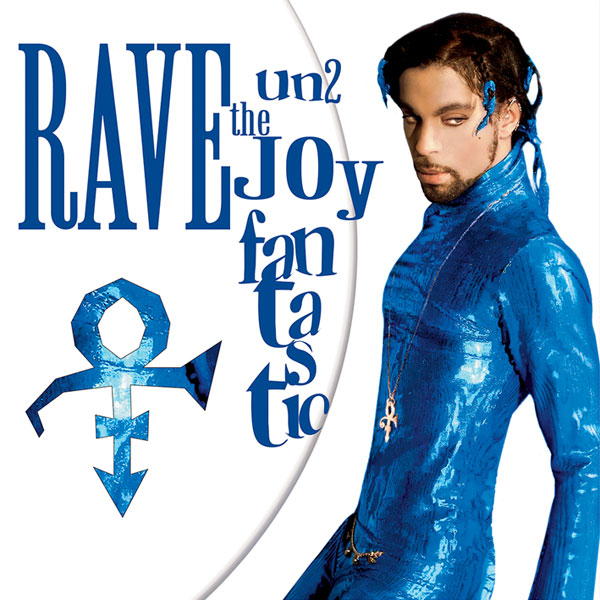
His twenty-third studio album Rave Un2 The Joy Fantastic proved more significant. That it marked Prince’s tentative return to his birth name, crediting its production to ‘Prince’ by name, as an artist he still appeared as Prince Love Symbol. Filled with collaborations with big selling artists Sheryl Crow, Gwen Stefani, Ani Difranco, and rappers Ruff Ryder and Chuck D, Prince signed with Arista in the hope Rave Un2 The Joy Fantastic would bring his commercial comeback in the US, impressed with Arista’s success returning Carlos Santana to the top of the charts that year following a long absence from the mainstream. Charting at number 18, Rave Un2 The Joy Fantastic met only moderate success and, disappointed with Arista’s promotion of it – issuing only one single – it was a bitter blow for Prince and did not hide his frustration with the label. His much-vaunted comeback had faltered. Prince defaulted to independent distribution again for a string of projects, starting in April 2001 with the issuing the sharper remix version of Rave Un2 The Joy Fantastic. This alternative version, titled Rave In2 The Joy Fantastic, received limited release under Prince’s NPG Records as an exclusive to online subscribers of Prince’s newly launched NPG Music Club.
To affirm his distrust with legal arrangements – “the prefix of contract is to Con” as he so referred to them – on 11 December 1998, even to the surprise of his wife Mayte when announcing at a press conference held in Spain (the couple lived at a 7,500sq. ft. villa in Marbella purchased by Mayte in the latter half of 1998 in the hope it would rekindle their marriage), on their way to this conference at the Santo Mauro Hotel, Prince broke the news to Mayte he would be announcing the annulment of their marriage. The annulment would take place on Valentine’s Day 1999, citing that the couple needed no piece of paper to make them partners. The fact is, during this time Prince had met Manuela Testolini, a charity consultant from Toronto who became a full-time staff member at Love 4 One Another during 2000. Testolini travelled with Prince on tour, manning the merchandise stalls and setting up projects locally for his Love 4 One Another charity. The breakdown of his marriage to Mayte had been the gradual result of a momentous event in Prince’s life.
During the run-up to the November release of the Emancipation album, on 16 October 1996 Mayte gave birth one month premature to their son whom they named Amiir (prince in Arabic). The baby suffered severe breathing complications caused by Pfeiffer syndrome type 2, a highly rare and often fatal genetic skull hardening disorder that exerts pressure on the brain. Tragically, the child’s life support was turned off one week later, on 23 October. The couple was devastated. As a way to process his grief, Prince took to the studio to record acoustic material what became The Truth album. That November 21st, Prince and Mayte were on TV in a sit-down interview inside Paisley Park’s atrium with Oprah Winfrey as part of the promotion of Emancipation, but inevitably the questioning turned to speculation of the child’s death, which he could not bear to confirm, replying cryptically “Our family exists”. Prince then showed Oprah around Paisley Park and the toy-filled nursery he had prepared for the child – a room Mayte, who had not been back to Paisley since returning from hospital was unaware existed. The tragedy rocked the couple. Prince began his Love 4 One Another Charities Tour that January to support the Emancipation album, but after their attempts at a second child resulting in miscarriage in November 1997, plus the growing onset of Prince’s spiritual direction, Prince and Mayte drifted apart. Their legal separation was complete in May 2000.
Since meeting Larry Graham in August 1997, Prince placed his solace in religion and under the guidance of Graham. Finding more common ground with Testolini who also followed Prince’s views on spiritualisation. On 28 March 2003 Prince was baptised as a Jehovah’s Witness, and having the previous year quit Minneapolis for Toronto to set up permanent home with Testolini. Meanwhile, Mayte sold the Marbella villa and relocated to LA and started a school teaching belly dancing and later on a successful dog grooming business.
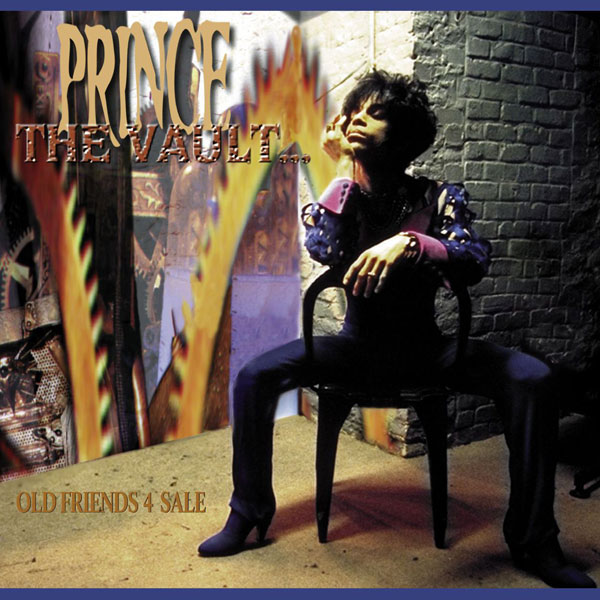
As the contract neared its expiration, Warner Brothers continued to monetise Prince’s unreleased catalogue, his studio material predating 1996 – the year Prince fulfilled his obligations upon handing over the master tape of the compilation The Vault: Old Friends 4 Sale. Despite much of its content dating from the early 1990s, when Prince handed over The Vault in 1996 it was crucially the sixth and final piece of material he was required to deliver Warner under their much contested contract of 1992. With three other Prince albums already scheduled in 1996 (Girl 6, Chaos And Disorder and the triple disc Emancipation), Warner held The Vault until August 1999. As if to divorce himself entirely from his Warner owned back catalogue, during the spring of 1999 Prince announced intentions to release a Newfunk Sampling Series, making available 700 royalty-free sound samples created during his Warner tenure and allow DJs and record producers mix these into their own music under a one-off royalty free license. Following a quick change of mind the release of the sampling series, proposed as a $700 seven-disc set, was suddenly and without reason cancelled close to its autumn 2000 release, along with the permission to use samples of his music.
The advent of the Millennium met the resurgence of, albeit not unexpectedly, interest in Prince’s apocalyptic hit 1999. Warner re-issued the original single on New Year’s Eve in 1998 for the arrival of 1999 and caused the song’s re-entry into Billboard’s top ten. In retaliation. Prince created his own re-mastered and rival version titled 1999: The New Master since he was unable to re-release any of his Warner era material himself unless he re-record and add a different artistic slant to the music. The New Master was distributed by NPG Records, and because Prince was still under the name of the unpronounceable Prince Love Symbol glyph, he nostalgically credited the release to The Revolution, the band whom the original 1982 single was billed alongside Prince. High hopes had been placed on Rave Un2 The Joy Fantastic to capitalise on Prince’s return to the mainstream in this crucial year. A special concert Rave Un2 The Year 2000 was filmed that December at Paisley Park and aired on In Demand pay-per-view on New Year’s Eve 1999.
Animosity between Prince and Warner’s ownership of his back catalogue found over the course of the ensuing decade each party continually countering the other with releases under their own label: NPG Records offering new music, with Warner retailing on the popularity of his greatest hits. Whether intentional or not Prince’s newfound notoriety over his name change to a glyph unearthed a masterstroke in branding, as everybody be that within the music industry, fans or the wider public alike were all equally aware and fascinated by this bizarre change of an individual’s moniker. The Artist Formally Known As Prince was the butt of jokes, be that in public, in TV, film or news articles, but nonetheless it was Prince’s name than those of his contemporaries being subliminally and continually embedded into the mindset of popular culture. Even in spheres unlikely otherwise to have known of him, references of Prince Love Symbol made in TV and print advertising had after all deflected the joke of the name change back to the perpetrators of the mockery than upon Prince himself. This curiosity spawned a resurgence of interest, not only in Prince’s back catalogue but awareness in his campaign for the music industry to improve the legal rights of musicians. The saga undoubtedly produced the most recognisable logos in music history and Prince Love Symbol remained Prince’s logo for the remainder of his career and beyond. Thanks to Prince, today it is a routine right of passage for stars to demand back ownership of their music.
Looking to start afresh, with his divorce with Mayte finalised and the Warner contract expired, on 16 May 2000, amid great personal joy, The Artist Formally Known As Prince declared to a packed press conference in New York that he had reclaimed his birthname to be known once again as Prince. That June, he hosted a week-long celebratory open house event in the week of his birthday, which invited fans to tour the studios of Paisley Park. The event Prince: A Celebration proved so popular the format continued in 2001 and 2002. In the winter of 2000, with no release to promote, Prince began an arena tour of the US, a hit and run tour of shows scheduled at short notice in case venues did not fill. The fear was proved unfounded as the public relished the return of ‘Prince’ in concert. Although his contractual obligations were fulfilled, Prince remained determined to claw back ownership of his music from Warner. The shows gave him a public platform to demand his master recordings from Warner, underscoring this by releasing his cover of When Will We B Paid? as a single during the tour.
With the music he stockpiled when denying Warner the new songs written during his embittered dispute, and his long-term ambition to offer it freely and directly to fans, Prince was keen to replace the conventional music machine he had become to distrust and leverage the internet as the primary channel to distribute his music. In July 2000 he founded NPGOnlineLTD.com a pioneering hub for fans to subscribe and download his latest and previously unreleased material. In March 2001 his online service evolved into the NPG Music Club a fully fledged platform complete with its very own rights-managed player, dedicated to make available to subscribing members (each paying a one-time fee of $100) the many tracks that would otherwise have languished in his vault. The club offered fans tantalising benefits, which in addition to swathes of unreleased songs – focussed on the material recorded between 2000 and 2001, including an aborted album project named High – live recordings, member exclusive CDs and access to front row seating and sound checks at concerts. NPG Music Club subscribed some 5,000 active members and being launched in the Napster era it saw Prince recognised as the first major artist to embrace the internet as a legitimate medium of music distribution.

Following a year out to recuperate, the death of his son and breakup of his marriage still very raw, Prince had shed his much of his animosity toward the music industry and became increasingly at peace. He joined the Jehovah’s Witness in 2001 and with that re-evaluated his entire musical outlook. Prince was no longer interested in writing radio-friendly hits but wanted to experiment new avenues for his output, newly freed from past constraints on his creativity and the necessity of mass market appeal to service a $100 million recording contract. Prince turned his focus to jazz fusion and instrumentation. Music he wanted to create.
In 2001, Prince produced what is perhaps the most experimental and spiritually influenced album of his career, the highly innovative The Rainbow Children. The album is special in that although a solo project it was recorded with a live band to create its earthy sound, boosted with the addition of two true virtuosos to his band: John Blackwell (drums) and Renato Neto (keyboards). Prince’s usual recording regime often started with him laying down the drum track entirely from memory, then layering each instrument separately to allow him to perfect the audio. Finally, he would add his vocals – sending out the sound engineer to be in the studio alone. The Rainbow Children was a significant departure and started a run of projects drawn on fusion jazz-funk. The first of these was One Nite Alone…, a piano album released in 2002 in response to fans’ pleas that he make one. The resulting theatre tour took its name from that album.
You can dance if you want to.
All The Critics Love U In New York (1982)
On New Year’s Day 2003 Prince released his first full digital album, the jazz-fused Xpectation, an instrumental produced in autumn 2001 in homage to his father, John Lewis Nelson, who died that August. A second instrumental release titled N.E.W.S, which comprised of four fourteen minute tracks titled after the points of the compass recorded over a single day in February 2003, it received a physical format issue that June. The three albums completed a run of issues exclusive to NPG Music Club. Although it was an exciting time to be a fan, with exception of Xpectation these were subsequently released through traditional channels through smaller independent outfits, internet sales at that time were not eligible for Billboard’s charts. Not that Prince cared about charts. Because of a resulting and lengthy departure from the mainstream, airplay and charts, his reluctance to appease to charts as a mark of success hardened. The jazz influenced The Rainbow Children, due to its musical depth gained paeans of praise from critics, marked the first album by a major artist to be released on the internet ahead of a physical commercial release. Its resulting limited distribution and experimental vein achieved only moderate commercial impact and failed even to crack the top 100 in the US. Prince’s subsequent One Nite Alone Tour of 2002 was thereby an untypically low-key affair.
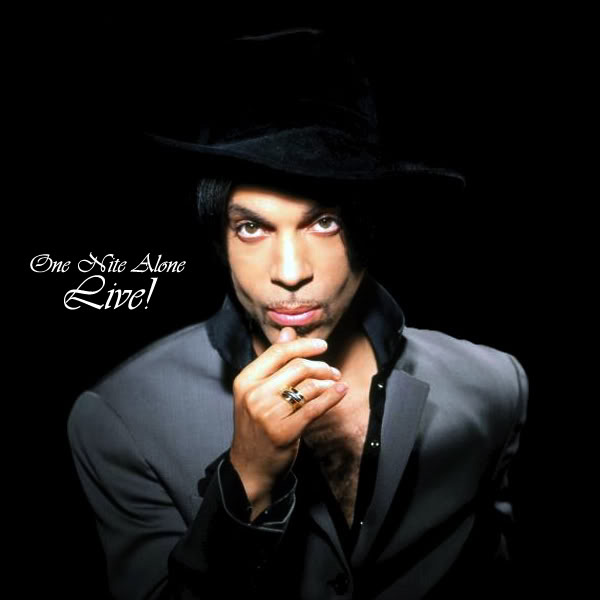
Still in need to recoup their lost advances for Prince’s contractual pay-outs, in May 2001 Warner released Prince’s second greatest hits compilation The Very Best Of Prince. In retaliation, Prince delayed his One Nite Alone world tour to March 2002 so that he could not be construed to endorse or accidentally promote the compilation’s release. Playing only theatres and finding many industry insiders believing the shows signalled Prince’s farewell outing, the tour was likewise viewed as Prince’s retirement from music. The Very Best Of Prince became a barometer of Prince’s career present and future. On its release in 2001 the collection peaked at number 66 in the US, yet after Prince’s later career revival, its re-entry went all the way to the top of the charts to become one of his most successful albums. Yet in 2001, Prince was deemed a diminished artist basking in the decline of relevancy against the face of shifted musical trends. Or so they thought. The tour’s intimacy and flexibility for setlists to stray from his conventional hits and revisit his less familiar catalogue, found it considered by fans as one of his best. So well received was it, on the tour’s conclusion Prince took the uncharacteristic step to release his first ever live album One Nite Alone… Live plus an accompanying DVD Prince: Live At The Aladdin Las Vegas with footage of the tour’s final show; further fulling speculation of his pending retirement. The release of a live album was significant as it ended Prince’s lifelong vow never to release an album of a live concert because doing so was to his mind necessitate deciding upon a definitive performance. One Nite Alone Tour was a triumph both with critics and at the box office. Playing small venues again gave him renewed vigour, heightened demand, and the experience boosted Prince’s belief to become a chart success once more.
Taking the unusual step to allow NPG Music Club members attend every sound check, the intimacy of the One Nite Alone Tour provided a rallying boost to his fanbase. Leaving audiences baying for more, and more importantly its bare bones production keeping financial overheads to a minimum boosted the profitability earned. Opposed to Lovesexy Tour which its entourage numbered ninety, One Nite Alone Tour set Prince a personal precedent to employ only local and minimal crews and cut the travelling entourage to just his band and a handful of staff. The experiences from this tour inadvertently began a new evolution in Prince’s touring career.

The year 2001 was a time of renewal in Prince’s life. His father John L. Nelson died aged 85 on 25 August 2001 shortly after he and Prince reconciled their fractious relationship which had been simmering since his childhood. Prince, who gave his father the ranch house on Kiowa Trail, had the property demolished in the weeks after John’s death. Prince dedicated the One Nite Alone… album to his father’s memory and on 15 February the following year, his mother Mattie Shaw also died, aged 68. Prince secretly married Testolini, aged 25, in Hawaii on 31 December 2001. He bought them a 14,280 sq ft home in October 2002 for $5.5 million at 61 The Bridle Path, the poshest suburb in Toronto, Testolini’s hometown. So secret was this wedding, indeed only when filing for their eventual divorce in May 2006 was their marriage able to be confirmed. The Bridle Path home was sold that year. As if to eradicate the ghosts of memories from failed relationships, Susannah Melvion, Mayte and now Testolini, his Galpin Blvd property was razed to the ground also. With his mind set to the future, life in Canada cleansed his soul. Prince seemed energised and happy enough to return to writing radio-friendly music once again and even dare think about the previously unimaginable. A return to the top of the charts and rekindle his successes of old.
Chapter 6: Welcome 2 The Dawn

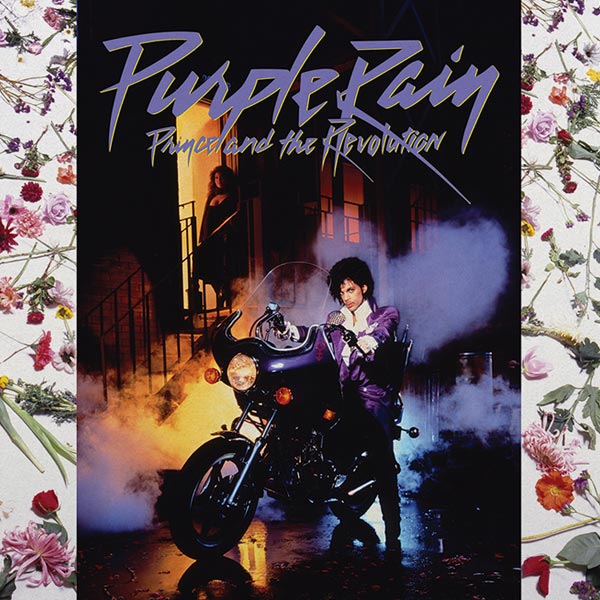
The arrival of 2004 witnessed a significant and surprise turning point in Prince’s career. The release of N.E.W.S in the wake of The Rainbow Children and Xpectation appeared to underline Prince’s creative departure both from popular music and commercial ambitions in favour of his new directions in jazz. Despite being his lowest selling album to date, N.E.W.S enjoyed critical acclaim and received even a Grammy Award nomination for Best Pop Instrumental. The combination of his nomination and the coincidence 2004 also marked the twentieth anniversary of Purple Rain, Prince was invited to perform alongside Beyoncé to open the 8th of February Grammy ceremony, which involved a special and rocking duet of Purple Rain. The appearance became a viral hit. That March in this anniversary year, Prince was inducted into the coveted US Rock And Roll Hall of Fame. The two events galvanised public appreciation of Prince and his popularity soared. To the delight also of his fans, his next and as it would be twenty-eighth studio album Musicology heralded Prince’s return after a lengthy and self-imposed exile, back to the top of the Billboard chart. Full of radio-friendly tracks, Musicology was also Prince’s highest selling album of the 2000s. For almost a decade, Prince had dedicated his post-Warner career trying to escape the shadow of his own past success; “My only competition? Is me in the past” he acknowledged in a song Don’t Play Me in 1997. But in 2003, he began to look at himself less seriously. Following a string of instrumentals that caught the attention only of his fanbase, he appeared renewed and more at ease writing popular, catchy hooks and tunes once more than focus on less accessible but more artful releases of late.
Prince wrote Musicology while living in Toronto. The process seemed to have a cathartic experience creating a record outside America, giving him this distance to absorb himself in the search to a return to the charts. Released by Columbia Records in April 2004, his first album under a major label since Arista in 1999, Musicology went double Platinum. At the surprise of many who had written him off, the album peaked on Billboard at number 3. Musicology delivered Prince’s biggest commercial success since Diamond And Pearls when under Warner a decade previous. Its supporting and continuously extended arena tour proved so popular it drew Prince’s biggest attendances since the Purple Rain concerts of 1984/5. The Musicology Live2004ever tour was hugely successful and grossed $90 million from the 1.47 million tickets sold across its 90 shows and was the year’s top draw. Musicology garnered Prince his fifth and sixth Grammys (for Call My Name, and the album’s title track Musicology – his first wins since 1986) and cemented the industry’s acceptance of his return to music’s mainstream.
Although Prince would later deny this was any form of comeback because he had never by definition ‘been away’ and that he was uninterested in chart success anyway – 2004 was nonetheless the revitalisation of his career and its resulting successes since. After years in what delivered a mixed bag of commercial success, the ‘comeback’ dispelled personal Prince’s doubt that his current output was able to ride high in the charts and reaffirm his musical relevance into the fourth decade of his career. Early 2004 became a busy schedule, to capitalise on the newfound momentum. In Addition to Musicology, that March Prince had NPG Music Club issue two additional studio albums. These digital releases were to bring together in two collections much of the songs released during the life of the club. The first volume The Chocolate Invasion contained many of the tracks Prince intended to release on an aborted project named High. This release was joined on the same day by Vol 2 The Slaughterhouse – themed on Prince’s frustration with the music industry. With dominance on the internet with NPG Music Club, a top selling concert tour, as well as a multi-Platinum album, 2004 was a momentous year in Prince’s career.

Following the breakdown of his marriage to Testolini, Prince relocated to Los Angeles. Having virtually shuttered Paisley Park since 2001 and now living in LA where he rented a home, where he was so taken with the city, in 2006 named his next album (partnering on this occasion with Universal Records) even took the name of his West Hollywood address – 3121, after 3121 Sierra Alta Way. Prince once again refreshed his backing band’s lineup, recruiting husband and wife Cora Coleman-Dunham (drums) and Joshua Dunham (bass). His next album 3121 was hailed by critics his best work since the 1980s, and the record buying public believed so too and sent it to number 1 in the Billboard charts to make it his first album to claim top spot since Batman in 1989. Prince always had an uncanny ability to create a hit in times of need: Kiss was written to recover the momentum lost after Around The World In A Day; Batdance put him back on the top of the US charts when sales of his music had been falling in his home market; Cream scored another chart-topping hit at a time when critics had written Prince off as outdated, as R&B began to dominate the charts in the 1990s. And then The Most Beautiful Girl In The World came out of a snub to a Warner executive who told Prince he had no more hit records left in him. Capitalising on his rediscovered momentum, Warner Bros Records prepared a release of Prince’s third greatest hits package.

Titled Ultimate the compilation contained Prince’s biggest hits dated between 1979 to 1993 and devoted a second disc to long-lost extended versions in the attempt to ensure even Prince’s most loyal fans would purchase what was in essence a repackaging of hits they already owned. Ultimate was scheduled for a March 2006 release but Prince filed an injunction to delay since it coincided with 3121, but the move happened so close to its street date many copies of Ultimate could not be cleared from the shelves in time and consequently ended up on the black market as sought-after items. Because many fans had already purchased their copies through unofficial sources in the fear it might never be released, by the time Ultimate got its official release that August sales were muted in result and the set achieved only moderate success in the charts, peaking at number 6. 3121 came out the winner and was cause celebration as Prince was about to become the centre of some quite enviable exposure.
Turning to new projects and requiring too much effort to run, NPGMusicClub.com was suddenly and permanently closed on 4 July 2006, weeks after it won the Webby Award for Best Celebrity Website. That November, Prince was inducted to the UK’s version of the Rock And Roll Hall of Fame, in the very month he began a run of highly lucrative revue shows at a major Las Vegas hotel, The Rio Suites. Performing a revue of his hits twice weekly in his custom fitted venue Club 3121 – complete with adjoining restaurant the Jazz Café. The shows were a resounding success and well received, extending its run through to the following April. This concept of a series of single venue shows inspired Prince to undertake another concert residency, grander in scale. Whereas the capacity of Club 3121 permitted a nightly attendance for approximately 800, Prince’s next plan to play an unprecedented run of 21 shows at London’s newly opened O2 Arena, boasted capacity for 23,000 fans per show. Such was the scale of this undertaking it would require the sale of almost half a million tickets and all at one single venue. Further to this, without a hit record to support and that his last major chart success was as far back as 1995 with The Most Beautiful Girl In The World, even someone of his ability of showmanship to draw crowds in this number could more likely prove Prince’s star appeal was faded. The venture was undoubtedly high risk and audacious even for an internationally renowned act of his calibre.
Recent years had given a major boost to Prince’s status. Following a slew of recognition for his contribution to music by receiving lifetime achievement awards from NAACP, plus inductions to both the US and UK Rock and Roll Halls of Fame, in 2007 Prince was invited to play a fifteen-minute performance for the halftime slot of February 4th’s Super Bowl XLI at the Dolphin Stadium, Miami – the most coveted and, with over 140 million viewers, the most watched event in the American TV calendar. He played a storming medley of eight songs, culminating with Purple Rain, which even the weather obliged in kind and rained. In 2022, NBC Sports ranked his performance the best halftime show in the event’s long history. UK’s Guardian newspaper included it in their 50 gigs that changed music, citing the appearance as “a very public reassertion of his genius”.
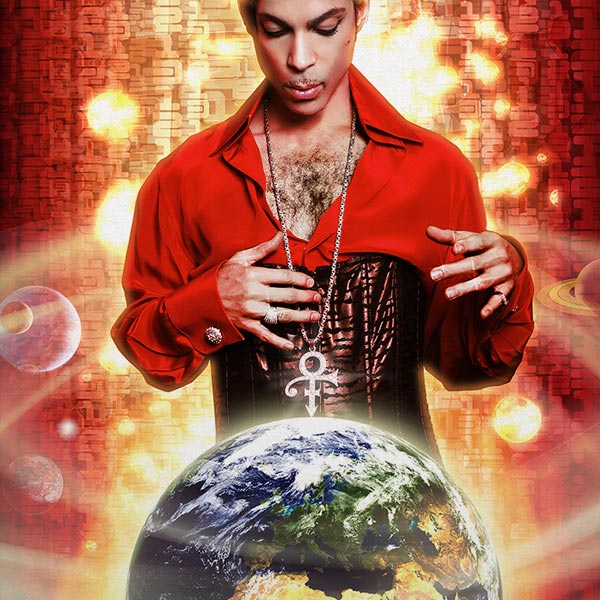
Coupled with a Golden Globe win that January for The Song Of The Heart, which he wrote and performed for Warner’s animated movie Happy Feet (the first newly created material given to his former label since 1996’s Girl 6), Prince’s run of fortune between his crucial return to the charts in 2004, the awards, high profile appearances and greatest hits package, saw his live act greatly elevated on the world stage. It was in these circumstances the ground was set for the summer of 2007 to host Prince’s long-awaited return to Europe with his sell-out 21 night London residency The Earth Tour. Comprising an unprecedented run of 21 of sold out shows at the 23,000 capacity O2 Arena, he fulfilled a decade long desire to ‘free music’ by giving away for free an accompanying album, titled Planet Earth, to every attendee at the concerts. Although he had previously included the Musicology CD in the price of the tickets of his 2004 tour, Planet Earth, in addition to its free distribution at the concerts, became the first new album to be given away completely free by a major artist as a covermount on a national newspaper. Planet Earth was issued with The Mail On Sunday on 15 July 2007 in promotion for the London shows which opened that August. The Earth Tour was also highly unusual in that the accompanying album was in effect a tool to promote the tour rather than the traditional purpose of the tour supporting the album. This role reversal infuriated the music industry, particularly Columbia Records the label granted the deal to distribute the album commercially. In response, Columbia refused to release it in the UK since the album was already freely given to the half million attendees of the London shows as well as the readership of the Mail On Sunday. To Prince this did not matter – it was one in the eye for the music industry. Planet Earth was highly acclaimed and in 2008 its song Future Baby Mamma won Prince his seventh Grammy. Where the album received commercial release in the US it charted impressively at number 3.
Prince’s single-venue residency smashed expectations, for an artist who was viewed by many to be in their decline, to then in a high-risk gamble fill all its 21 shows. To mark the anniversary of this unprecedented event, in 2008 Prince released an album named Indigo Nights comprised of recordings captured from two aftershows performed at The O2’s adjoining club IndigO2. The CD was issued as a sleeve insert to the book 21 Nights a behind the scenes photo documentary by Randee St. Nicholas journaling his record-setting London stint. Following London, Prince once again settled down to long-term living in LA, renting homes throughout 2008. On 26 April, he took a chartered flight to Coachella to headline America’s most prestigious music festival, commanding a near $5 million fee for the appearance. Supported by The Time and Sheila E he played to a sold-out Saturday attendance of 50,000. The performance became regarded the most iconic in the event’s history.

Buoyed by the unconventional means with which he was able to distribute Musicology and Planet Earth and still averse to signing a traditional recording contract beyond making informal ad-hoc single-album arrangements, Prince continued to explore ever new channels to distribute his music and reach new fans. His next project, once again recorded entirely in LA, was released in March 2009. A triple-disc set packaging two entirely new and stylistically different studio albums LotusFlow3r and MPLSound of his own, plus a third featuring his latest protégé and girlfriend Bria Valente, titled Elixer, which too written and produced by Prince. Although originally intended for release separately, the three were combined as a packaged set and released through an exclusive distribution deal with the North American discount retail chain-store giant Target. Even despite this venture restricted its release potential (and with no physical format available abroad at all) the set still managed to almost top the Billboard chart in the US to reach number 2. His successes of 2007 and 2008, and that he proved was still able and willing to aim for and top the charts, allowed Prince to content himself with mainstream and musical relevance once more.
Unlike his extravagances during the 1980s and 90s, Prince had got his spending under control, purged of vast entourages of the past and keeping distribution arrangements short lived one-off deals that would guarantee bulk unit sales than rely on the turbulent and unreliable income of royalties. Having agreed a fixed fee with the UK’s The Mail on Sunday in 2007 to distribute Planet Earth as a giveaway covermount, Prince reprised this formula in 2010 for this thirty-fifth studio album 20TEN, forging similar deals with a string of European newspapers to freely distribute it throughout July that year. Although the plan to distribute it as a retail disc in the US never materialised, Prince’s discussions with Warner to distribute 20TEN as a deluxe edition revealed the green shoots of reconciliation between the two. That the door was finally open for collaboration with his former label at some point in the future.

Having struck a deal to distribute 2.5 million copies of 20TEN in the UK as a covermount for The Daily Mirror newspaper, than rely once more on chart success and the uncertainty that presented, especially in the digital age troubled with dwindling physical sales (Prince was unimpressed with Universal over their promotion of 3121 and Arista with theirs for Rave Un2 The Joy Fantastic) plus the ever increasing spread of ripped material on the internet, Prince’s frustration with piracy and the digital music it espoused spurred to him withdraw from online avenues completely. Prince took down his latest subscription website lotusflow3r.com on 23 March 2010. Against the backdrop of his frustration over the internet’s facilitation of pirated material and how the explosion of digital music had all but destroyed the earthy sound of analogue, Prince declared shortly after the release of 20TEN having no intention to record another album again. He proclaimed the internet was ‘dead’ and that he had no place on it. Calling it ‘recording rehab’ for spending too many years stuck in the studio, having been working on two albums at the start of 2010 alone. Prince dedicated much of 2011/13 to touring, chiefly the US, with what was essentially a string of smaller tours under the umbrella Welcome 2 America. The tour was named after the studio album he produced under the same name Welcome 2 America. He shelved the Welcome 2 America album in favour of 20TEN, but in 2021 it got its eventual release as a Deluxe Edition produced by The Prince Estate.
I’m taking a break, the industry’s going through a lot of changes.
This lengthy tour also included two single-venue residency style stints, firstly as 21 Nite Stand hosted at The Forum in LA throughout April and May 2011, and Welcome 2 Chicago to bring to wider tour finally to a close in September 2012. It even encompassed micro tours, Welcome 2 Canada and Welcome 2 Australia, in addition to a headlining tour of European festivals. The run also facilitated Prince’s first appearance at a UK festival – snubbing Glastonbury the obvious event and despite their many invitations by opting to play a younger and less known rival, The Hop Farm on 3 July 2011. Surprising many, Prince promoted the Canadian leg of this tour with the digital release of the single Extraloveable – his first use of the internet since closing lotusflow3r.com just the previous year. His touring became so successful, 2011 and 2012 ticked by without any major releases. Fans fretted whether Prince would ever head back to studio again.
Chapter 7: Status Symbol
A full four years would pass until Prince released his next studio album. It was a tortiously long wait for fans that had been used to at least one album per year. Taking to Twitter under an anonymous account bearing the profile ‘international art thief’ he built momentum for his new and all-female funk-rock band 3rdEyeGirl – Hannah Ford (drums), Donna Grantis (guitar) and Ida Nielsen (bass) – and launched his first website since 2010, 3rdEyeGirl.com at the outset of 2013 to release their recordings. Inspired by this fresh band, their introductory Live Out Loud Tour performed two shows nightly along the west coast USA throughout the spring of 2013.
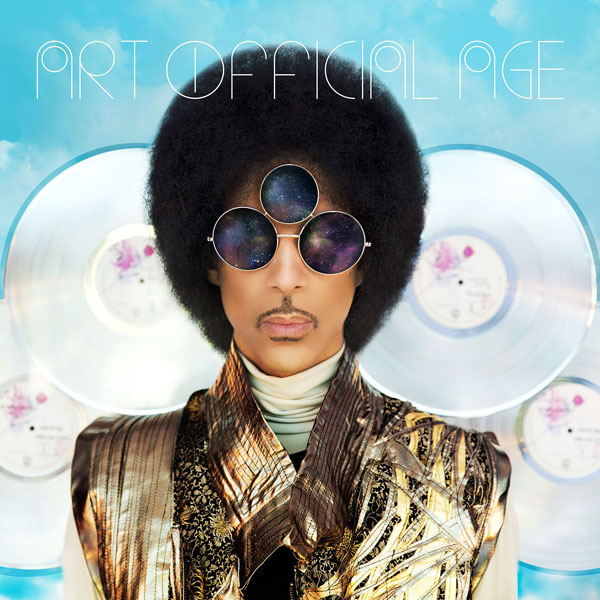
The year 2014 kicked off with a mass-exposure appearance, Prince’s second and final TV cameo this time for his favourite show New Girl, aired on 2 February ahead of the Super Bowl. A small venue grassroots style promotional tour for 3rdEyeGirl followed a few days later, which by the latter half of the year upscaled to the festival circuit to build anticipation for their debut album Plectrumelectrum. The initial phase of this tour formed of a series of ‘guerrilla’ concerts across London, which the quartet began a series of hit and run shows played at a variety of iconic venues and announced barely a day before and even sometimes on the day of the event itself. The second phase returned to the UK that May, billed as Hit And Run Part II its shows were more conventionally scheduled and staged in arenas. However last minute the shows were announced they instilled the sense of occasion into every performance and the longevity of the tour was purely relied upon the excitement created, to which Prince responded in kind. When Plectrumelectrum was eventually released on 29 September 2014 it was unexpectedly joined that day by Art Official Age – Prince’s first solo album in four years. Maintaining his unique tradition to employ ever new avenues to release and promote his music, this double release came under exclusive license to his old nemesis Warner Bros Records. This reconciliation between Warner and Prince was much welcomed by fans and rekindled a return to the golden partnership of old which had forged the halcyon years of Prince’s career. Both albums peaked at 5 and 8 in Billboard’s chart as a result. They were incredibly well received.

In 2015, Prince continued to pursue alternative outlets for his music. His next album HITNRUN Phase One was released that September with TIDAL. The USP of this new player in digital music streaming offered both high fidelity sound and fare royalties paid to artists. Owned by Jay-Z in 2015, TIDAL was looking for a high profile collaboration to promote the platform. Its artist friendly approach spoke to Prince’s ideals, and an exclusivity arrangement was cordially struck, albeit to the consternation of many fans unhappy to ‘rent’ Prince’s music. Possibly for this reason, the album was quickly released as a retail CD also. This stalled release harmed the album’s success which saw it leave little impression at only 70 in the US. Like with Art Official Age, HITNRUN (a nod to his series of ‘Hit N Run’ gigs of 2013-15) a follow-up album dropped on TIDAL without notice that December, HITNRUN Phase Two. Both albums were co-produced by Hannah Ford’s husband Joshua Welton and marked the first occasions Prince’s his forty-year career having his studio album produced with someone else – arguably under in the intent to reinvent his sound and to his broaden appeal to younger audiences. Lacking promotion, HITNRUN Phase Two debuted at number 40 in the US. It would tragically become the final album Prince ever released.
In 2016, Prince embarked on what transpired as his final tour. Postponed from late 2015 due to the terror attacks in Paris on 13 November, Piano & A Microphone Tour was a series of stripped-down shows with simply Prince sat at a piano with a microphone. The show was launched at a gala event staged at Paisley Park Studios on 21 January 2016, and the tour itself opened in Australia on 16 February. Its format was open and honest, and some say was the best tour in his career as it was so bare bones and candid. On stage, solo, with only a piano and his voice was as if Prince was channelling his own father, John L. Nelson, whom as a child he watched from the wings captivate audiences in Minneapolis’ clubs. In practical terms, the tour’s structure served as a mask for the chronic pain Prince endured from arthritis in his hips following years of high energy performances and launching himself from tall stage risers wearing 4-inch Cuban heels and doing splits. The show would enable him to tour but remain sedentary at all times and ensure no one would think to question his health. Tragically Prince did not complete this tour.

The year and tour started in a period of great personal reflection by Prince. In March 2016 he announced to great surprise of striking a publishing deal to write his own memoir. And on the tour’s opening night, he received word of the sudden death of former girlfriend Denise “Vanity” Matthews at the age of 57, the news crushed him. When the tour headed to America, what became Prince’s final ever shows took place in Atlanta on 14 April 2016. The shows had been rescheduled from two cancelled concerts Prince was due to perform on the 7th, for which he apologised to the audience during the show on the 14th due having done so for feeling “under the weather”. Speculation grew that he was covering up a more serious illness and sparked a wider concern over the state of the star’s health. During his subsequent flight home back to Minneapolis in his chartered 1988 Dassault Falcon 900 jet, departing Hartsfield-Jackson, Atlanta International Airport at 12:51am on 15 April, accompanied on board by best friend Kirk Johnson and singer and current girlfriend Judith Hill, Prince suffered a seizure and lost consciousness. At 1:12am the plane radioed a request to make an emergency landing at Moline, Illinois a mere 48 minutes short from Prince’s destination airport. On arrival, an emergency call was put and paramedics boarded the plane with it still sat on the runway, treating Prince with a shot of the opiate antidote Narcan and transferred him by ambulance to Trinity Moline Hospital. Prince recovered and discharged himself three hours later and resumed the flight home at 10:57 that morning, quickly dismissing the concerns of fans with having received emergency fluids for ‘flu-like‘ symptoms.
Wait a few days before you waste any prayers.
Many were far from convinced that a plane would undergo an emergency landing so near to its destination airport over a simple case of flu and believed something more ominous was at hand. Alarm over Prince’s health was bolstered by uncharacteristic behaviour in previous months: his decision to write the memoir; the cancelled European leg in late 2015 to delay Piano & A Microphone Tour – concerts which would be a seated performance and the most introspective of his career. Odd behaviour for a star who habitually shied away from revealing details about personal life and revelled in mystery. On April 16th, Prince hosted a dance party at Paisley Park Studios to scotch rumours that he was gravely ill, and whilst he did not perform he briefly appeared telling the audience to “Wait a few days before you waste any prayers”. On the 19th, he attended a Lizz Wright concert at the Dakota Jazz Club in downtown Minneapolis. It was his final public appearance. In the two days that followed, Prince made frequent trips to a local Walgreens pharmacy to obtain powerful prescription painkillers. He subsequently relapsed and sought urgent medical advice but his health deteriorated before treatment was given.
The medication you were given has put you in suspended animation for quite some time.
Art Official Age
At 9:43 on the morning of Thursday, 21 April 2016 emergency services were called to Paisley Park Studios where Prince was found slumped and unresponsive on the floor of the elevator that serviced his first floor living quarters and the ground level studio. Prince was declared dead at the scene at 10:07. In observance of Jehovah Witness convention which demands funerals to take place within a week of death, Prince was cremated on 23 April following a small private ceremony at Paisley Park, led by his sister Tyka Nelson and attended a small gathering of close family as well as bandmates Sheila E and Larry Graham. The ensuing investigation by the medical examiner ruled Prince’s death was caused by an accidental overdose from the powerful opiate-based painkiller fentanyl, a synthetic opioid up to fifty times more potent than heroin and fatal with a dose of just one quarter of a milligram. Responsible for 20,100 deaths in the US in 2016 alone, fentanyl abuse has since become so prevalent it is a designated health emergency resulting in 71,000 deaths in the country in 2021 alone. The figure rises annually.
News of Prince’s death arrived as nothing less than an immense shock to fans and media alike. Prince, who was slight of frame, an avid basketball and ping-pong player, vegan, non-smoker and teetotaller, was outwardly the picture of health. But it emerged that in later years he became dependant on ever more powerful painkillers to seek relief from the suffering long endured in his hips, brought on by years leaping off stage risers and performing splits in his live shows. It is understood the catalyst happened in 2004, while in Atlanta during Musicology Tour, he slipped and badly damaged his hip. Despite requiring a full hip replacement in 2009, Prince apparently refused surgery because the Jehovah’s Witness faith forbids blood transfusions. He instead fought off the pain by self-medicating on increasingly potent drugs and attended public appearances wielding a walking stick which most dismissed at the time as just one of his many fashion accessories. His increasing dependency on painkillers destroyed his heath. In reaction to his emergency hospitalisation following his mid-flight seizure on 20 April 2016, Prince sought help from addiction specialist Dr Howard Kornfeld.
Kornfeld, founder of San Francisco-based pain medication addiction clinic Recovery Without Walls was unable to attend to Prince that day but instead dispatched his son Andrew to assess the star ahead of a consultation arranged for 22 April. Andrew, Kirk Johnson and Meron Bekure (Prince’s assistant and Paisley Park employee) discovered Prince dead when arriving at his home the morning of April 21st, Kornfeld putting the call to the emergency services. It was assessed Prince had likely lain dead for six hours and was later revealed the concentration of fentanyl in his blood measured 67.8 micrograms per litre: death commonly occurring with concentrations of the drug at between 3 and 50 micrograms per litre. On 2 June 2016, the Midwest Medical Examiner’s Office confirmed Prince’s death was caused by an accidental overdose of counterfeit fentanyl tablets mislabelled as Vidicon. Criminal investigation against the doctor prescribing Prince his medication ensued and was later declared closed on 19 April 2018 clearing the doctor of malpractice. Prince was 57 when he died.
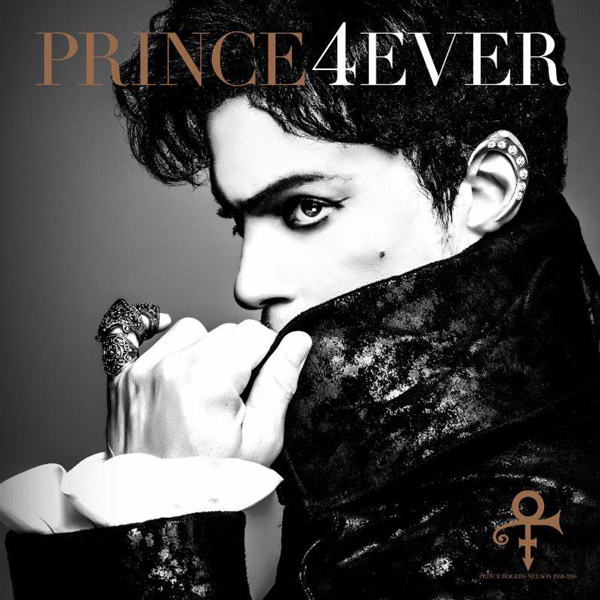
Keeping with Prince’s wishes, Paisley Park his home since 1987 and up to the time of his death opened to public tours from 6 October 2016. Now a Graceland style attraction and museum it allows fans to make personal pilgrimages to the site Prince had lived and created so many of his hits and iconic records that brought joy into countless lives worldwide. Such was the level of interest in his passing, ‘Prince’ was the fourth most searched term on Google in 2016.
Today, Prince’s music legacy and image is managed by The Prince Estate. Having left no will and legal heir, a lengthy court battle to settle Prince’s affairs continued through to January 2022. The sheer complexity of valuing Prince’s intellectual property and the cost of the legal proceedings led to three of Prince’s siblings and named heirs sell their stakes to the firm Primary Wave. During this time, the estate remained under the administration of the court appointed bank Comerica Trust. The Prince Estate’s chief responsibility was to license songs from the now opened Paisley Park vault, which remain undergoing release by Warner Brothers and, since 2018 Sony Legacy Recordings – the latter awarded rights to his post 1993 catalogue and from 2021 non-US rights to the Warner material, save just the four soundtrack albums. Prince’s unfinished memoir The Beautiful Ones was published in October 2019. When Prince’s probate and tax affairs were settled in July 2022, his estate past to the ownership of Prince Legacy LLC, owned solely between the heirs and Primary Wave.
Apart from his astonishing musical legacy, Prince both shaped and prophesied the demise of the traditional music industry and led the charge for freely distributed digital music and the rights of artists. Initially an outlier to speak out, he courageously risked his own career to take an unprecedented stance against the music industry when other artists feared to do so. He fought for and in 2014 won back the ownership of his music. Every major artist today can exercise their paternal right to their creations as a direct result of Prince’s intervention. He not also transformed the careers of the many artists he supported and nurtured, they owe him their future careers.
He’s a better guitarist than you are. He’s a better singer than you are. He can dance better than you. His songs are better than yours.
David Fricke – senior editor, Rolling Stone magazine
As an artist who created many of most recognisable songs of a generation, by the end of his life Prince was able to find contentment in that money and art could after all cohabit in his life. Much maligned but very much copied by those who malign him, Prince was the ultimate showman, trailblazer, and who single-handedly shaped today’s perception of popular music and how we consume it. Time and again he defined the course of music, such is the power of his legacy. Yet don’t take my word for it, take it from David Fricke of Rolling Stone magazine: “His dregs are better than most people’s carefully calculated product.”
Famously able to survive on only with few hours’ sleep per night and during the day write, record and produce an entire song from conception to completion – Prince, who once vowed to write and record as least one song every single day until his death, was tireless in his love of music. The perfection of his craft lives on as the soundtrack to the lives of millions that loved him and who so dearly continue to miss him. Prince was the best there ever was and the best there ever will be.
Goldies Parade
Prince biography »
Delirious: The Warner era (1958 – 1990) & The Warner dispute (1991 – 1996)
© Goldies Parade, 1998 – 2026 • Privacy