
Home /
NPG Records
In 1993, the relationship between Prince and Warner Bros Records had plunged to a low following the erosion of trust sparked by the contract the pair signed in 1992 for a record $100m – the highest amount paid to any performer let alone solo artist. The unbalanced terms, as Prince saw them, transferred Warner too much control on his music and recording ambitions. But with his Paisley Park Studios costing $6m a year to run, Prince, in little position to manoeuvre, signed the contract. With his label Paisley Park Records a Warner Brothers entity, Prince’s calls to release more music, at the time Warner preferred he do the opposite and reduce output in order to maximise sales, Prince felt trapped. Pre-empting tighter controls on the horizon Prince founded a self owned and thus independent label in 1993, which he named NPG Records. Prince appointing trusted friend and New Power Generation band member Levi Seacer Jr. its inaugural President of Operations.

The first release of NPG Records was GoldNigga, an album wholly credited to Prince’s band the NPG, to hide his involvement. The CD was sold at the concerts of the Act II Tour in the summer of 1993. Whilst that album’s distribution was nonetheless operating to the scale of a cottage industry, it could not have made clearer Prince’s intent to continue releasing music through NPG Records. When seeking Warner’s permission to issue his first commercial release with NPG Records, Warner politely obliged but on the proviso it be one song only.
That song happened to be The Most Beautiful Girl In The World which Prince recorded in September 1993, but with no distribution network to speak of he brokered an arrangement with Bellmark Records, an independent music distribution house in LA. The single was released on 9 February 1994 and its unexpected success produced a seismic moment in his career. The song peaked at number 3 in the US singles chart and was a smash hit, but it was also crucially his first and only single to top the UK charts. The song, under self-funded distribution, met considerable success and was an unexpected boost to Prince’s ambitions as an independent artist. When Warner eventually released the album which that single was intended to support, The Gold Experience, on 26 September 1995, NPG Records was granted the production credit.
With their star act seemingly operating beyond control, Warner announced the closure Paisley Park Records on 1 February 1994. Their doing so spurred Prince to issue more releases under NPG Records. Turning first to the unreleased material by artists he was working with as Paisley Park Records, he raced out a compilation album as if to showcase the stable of talent newly transferred to the auspices of NPG Records. Named 1-800 NEW FUNK this compilation album featured music from the collection of side projects Prince was recording over previous months, its release on 12 August 1994 was timed to lay the gauntlet at Warner’s release of Come that followed a few days later on the 15th. Again, without a distribution network behind him, the name of the album was chosen to promote the phone order line and website 1800newfunk.com of Prince’s merchandise outfit, and in that moment formed one of the earliest online e-commerce ventures. This website, without the aid of any formal distribution arrangement or marketing machine, shipped 250,000 units of his next album, a triple LP named Crystal Ball as a simple mail order – a huge surprise also to the staff of NPG Records who had been thrown onto the backfoot at having to fulfil a seemingly insurmountable backlog of orders. Despite his lack in resource, this was proof enough to Prince he could make a success as a commercially independent artist.
NPG Records certainly empowered Prince to produce music at the rate he desired, but distribution remained its greatest challenge. Acknowledging that this was his greatest barrier to market, Prince was a household name after all, and over following years he looked again to the majors to strike up manufacturing, distribution and marketing deals but at his terms. The arrangements were cautiously simple. Whilst the labels could take their cut for the distribution, Prince would retain the ownership and master recordings of his music. This new approach saw his royalty fee soar to 70% per sale. Indeed, his first deal, with EMI-Capitol, proved both so successful and cordial he afterwards brokered a string of similar arrangements with virtually every major; BMG, Arista, Columbia, Universal and Epic, even Warner Bros again. Yet their traditional model of business still relied on chart success – particularly problematic since Prince had become ever more estranged from radio airplay. His promiscuous relationships with labels did little to nurture sustained radio rotation. His resulting disappearance from the mainstream pushed Prince to pursue ever alternative avenues to distribute his music, first setting deals with small independent outfits such as Edel and Redline Entertainment, to even an exclusivity arrangement with Target retail stores. He also released two albums distributed as newspaper covermounts, as well as having venues hand out copies of his latest album, absorbed in the ticket price of his shows. Despite presenting a haphazard approach with fans to obtain his music, the arrangements guaranteed bulk sales than rely on charts as the measure of success.
And if they stood up and behaved like the humans they’re supposed 2 as opposed 2 the way they are not.
Prince was one of the first, if not the first major, artist to leverage the internet as a medium to deliver music directly to fans, offering digital downloads on his pioneering subscription service NPG Music Club. NPG Records enjoyed a dexterity that the larger and traditional labels could not keep pace with – adapting methods and pioneering models of distribution since employed by the music industry today.
Unlike Paisley Park Records, which was open to other artists and thereby function as a conventional label, NPG Records was more of a closed shop – its doors open purely to Prince and the artists only he wished to record with. An early release was Child Of The Sun the solo debut for Prince’s new wife Mayte. The catalogue of NPG Records expanded to release music also for Prince’s creative influences George Clinton, Mavis Staples, Larry Graham and Chaka Khan, as well as girlfriends Bria Valente, Andy Allo and Judith Hill.
Prince led the direction of NPG Records until 2013, when he passed its running to guitar technician Trevor Guy, who remained in post until Prince’s death in 2016. Following his death, NPG Records exists today as a publishing label under the ownership of The Prince Estate posthumously issuing Prince’s music catalogue through partnerships with Sony Legacy and Warner Records.
Key releases
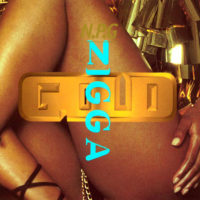
GoldNigga
August 1993

The Most Beautiful Girl In The World
February 1994
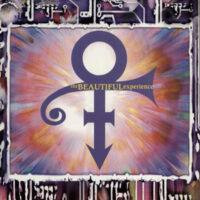
The Beautiful Experience
May 1994

1-800 NEW FUNK
August 1994

Hey Man... Smell My Finger [Reissue]
October 1994

The Voice [Reissue]
January 1995

Exodus
March 1995

The Gold Experience
September 1995

Child Of The Sun
November 1995

Emancipation
November 1996
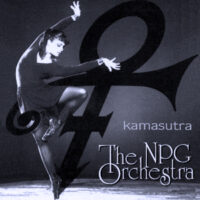
Kamasutra
February 1997

Crystal Ball
January 1998

The Truth
January 1998
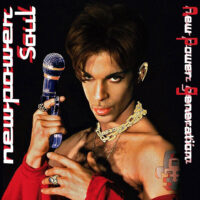
Newpower Soul
June 1998

Come 2 My House
July 1998

GCS 2000
July 1998
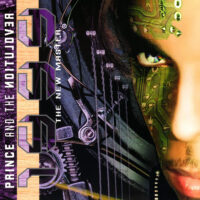
1999: The New Master
February 1999

Rave Un2 The Joy Fantastic
November 1999

U Make My Sun Shine
April 2001

Rave In2 The Joy Fantastic
April 2001

The Rainbow Children
November 2001

One Nite Alone...
May 2002

One Nite Alone... Live!
December 2002
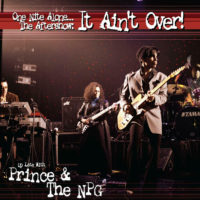
The Aftershow: It Ain’t Over
December 2002

Xpectation
January 2003

N.E.W.S
July 2003

C-Note
March 2004

The Chocolate Invasion
March 2004

The Slaughterhouse
March 2004

Musicology
April 2004

S.S.T.
October 2005

3121
March 2006

Planet Earth
July 2007

F.U.N.K.
November 2007

Indigo Nights
September 2008

Elixer
March 2009

Lotusflow3r
March 2009

MPLSound
March 2009

20TEN
July 2010

Superconductor
November 2012

The Unexpected
February 2014

Art Official Age
September 2014
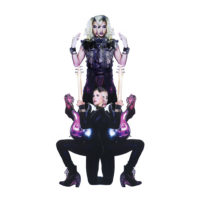
Plectrumelectrum
September 2014
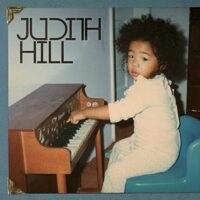
Back In Time
March 2015

Baltimore
May 2015
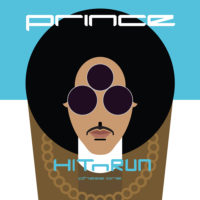
HITNRUN Phase One
September 2015

Oui Can Luv
November 2015

HITNRUN Phase Two
December 2015
© Goldies Parade, 1998 – 2026 • Privacy