
Home /
Prince and Warner Bros Records
Record contracts are just like – I’m gonna say the word – slavery.
Prince’s relationship with Warner Bros. Records stands as one of the most complex, influential, and ultimately most consequential artist-label partnerships in modern music history.
Founded in 1958 to create soundtracks for its motion pictures division, Warner Bros Records became dominant in the music industry, and serious challenger to the likes of contemporary Hollywood rivals Columbia and Capitol Records. Mo Ostin became its CEO in 1963, and in 1967 landed the label’s key signings, Jimi Hendrix and Fleetwood Mac. Despite not being known to sign many black artists, Prince made such great impression on Warner they recognised the prodigious talent that this unique nineteen year old could write, produce, arrange, and perform every instrument. Ostin signed Prince to the label on 25 June 1977, and for his debut album For You, Warner assigned Tommy Vicari to executive produce the record and school Prince in the art of studio craft. It became a troubled production in result and spent so long in the studio it almost blew the entire budget of Prince’s three album contract.
While his second LP Prince was a less strenuous affair and better received in the charts, it was not until Prince’s third record Dirty Mind, laid down at his home studio in Minneapolis, was the first album created by him in full autonomous control. It was a funkier record in result and established him as a daring artist and set him on the foothills toward stardom. In 1983, owing to the success of his breakout fifth album 1999, as a sweetener to extend their contract, Warner agreed to finance a movie based on Prince’s life and with him in the starring role. The resulting Purple Rain movie became a global phenomenon, and its accompanying soundtrack won Prince the Oscar for Best Original Score.
By the mid‑1980s, Prince’s commercial success following a string of hits with 1999 and Purple Rain, was so influential on 80s music, Warner expanded the partnership and in 1985 approved the creation of Paisley Park Records, a joint venture allowing Prince to run his own imprint while Warner handled the global distribution. This rarely used arrangement mirrored Parlophone allowing The Beatles’ to establish Apple Records and exist as a virtually standalone operation. Warner likewise gave Prince a self-functioning recording label through which to release his own output as well as sign additional artists. Although Warner subsidised Paisley Park Records to the tune of $20 million to cover its production costs, the label remained under Warner’s corporate umbrella. Prince enjoyed the illusion of independence, but Warner still owned his master recordings and controlled the commercial machinery.
Paisley Park Records
Under Paisley Park Records Prince released seven studio albums, from Around The World In A Day (1985) through to Love Symbol (1992), as well as albums for his string of side projects The Time, Sheila E, The Family, Madhouse, Jill Jones, Mavis Staples, and others. Although he had tremendous success with his own albums, the label never became the hit‑making factory Warner had hoped. The first test of their relationship came in 1986, when sales of Parade faltered in the US but proved stronger in overseas territories, plus the accompanying movie Under The Cherry Moon failed to perform in the box office. Tensions escalated in 1989, when Prince fired his long‑time management team Cavallo, Ruffalo & Fargnoli after discovering they had signed artists to Paisley Park Records without his knowledge. Meanwhile Warner continued to bankroll the label but the returns were diminishing. Prince’s prolific output of his own albums, spin-off projects, plus three feature films, in addition to the financial upkeep of his $10 million self-funded purpose built recording compound in Minneapolis, Paisley Park Studios, opened on 11 September 1986 and proved so ruinously expensive to maintain. Warner began to push for more commercially strategic releases.
1992 contract
Critically acclaimed releases ensued with Sign O’ The Times (1987) and Lovesexy (1988) and yet again his records sold better overseas than at home. To boost domestic sales, Warner attached Prince to their 1989 big budget movie Batman, to have him create its dynamic soundtrack. Prince’s Batman OST became one of the fastest selling albums in music history and propelled him back to the top of the Billboard chart for the first time since Around The World In A Day. This new momentum saw Warner give the green light to finance Prince’s third motion picture, Graffiti Bridge, in 1990. The movie was badly received and Prince was now in urgent need of a hit record, which he found with Diamonds And Pearls in 1991. Its success led Warner to pursue a further contract extension. But the relationship soured quickly after 31 August 1992, when the parties signed a record‑breaking $100 million six-album extension in what was then the largest ever offered to a solo artist – eclipsing similar deals struck for Michael Jackson and Madonna each valued at $60 million. Although the contract guaranteed Prince a $10 million advance per album, to allow Warner Bros to recoup its investment this meant that every album under this contract must retail at least five million units – the same amount Diamonds And Pearls achieved in 1991 – for six years on the trot. From the outset this proposition proved highly unrealistic in a shifting musical landscape dominated by genres Prince little foothold – hip hop and R&B. Worse still, Warner still retained ownership of all Prince’s master recordings since signed as a teenager in 1977, plus the uncomfortable truth that since Purple Rain in 1984 the star had never been able to emulate its success. The 1992 agreement even allowed Prince to sign new artists to the Warner label and so was also given the figurehead position of VP of Artists and Repertoire which came with its own suite of offices at their Burbank HQ and a seat on the board.
I guess a hundred million records ain’t enough.
Prince – Calabama
To maximise sales, Warner demanded limits on his output, insisting he release fewer albums to avoid saturation. For an artist who routinely recorded multiple albums per year, this suffocated Prince’s creativity, who wanted to increase releases to sustain the rate he was creating music, envisioning at least one album per year. Critically the first album under the contract Love Symbol failed to meet commercial expectations, and when Warner’s subsequent refusal to release his next project, The Gold Experience, in April 1993 Prince announced his retirement from recording and to instead furnish the remaining albums using material from his vault. On 7 June 1993, Prince then took the extraordinary step of changing his name to an unpronounceable Prince Love Symbol on the pretext that ‘Prince’ was little more than intellectual property enslaved to Warner, and adopting the glyph would draw global attention to his battle for artistic ownership. Prince intensified the protest by pencilling ‘SLAVE‘ on his cheek for public appearances and refused to promote releases for Warner. His new music would only be released independently through his newly created label NPG Records, and used concerts, award shows, and key events to criticise Warner’s control over his master tapes.
Warner responded by publishing material from Prince’s vault without his blessing and issued a multi release greatest hits collection The Hits/The B‑Sides (1993), and then The Black Album (1994) originally shelved in 1987 on Prince’s insistence – packages that Prince vehemently opposed. To diffuse tensions, in 1994 Ostin granted Prince to release one song under NPG Records as long as he paid for its distribution. The song was The Most Beautiful Girl In The World and to the chagrin of Warner it became a global hit, securing Prince his first and only UK chart topping single. In concession, Warner granted NPG Records production credit for The Gold Experience when the album was finally released in September 1995.
In 1994, Prince’s dispute with Warner reached its climax, when the label terminated its distribution deal with Paisley Park Records on 1 February, effectively shutting the imprint down. As Prince had anticipated this, he began shifting projects to NPG Records, but the closure symbolised the breakdown between artist and label. For his fifteenth album under Warner, Come displayed the epitaph ‘Prince: 1958-1993’ to highlight the death of his former persona. From then on Prince would be known as Prince Love Symbol.
In 1996, Prince delivered the two remaining albums required under the contract, comprised of vault material, firstly Chaos And Disorder a record filled with thinly veiled attacks on Warner, and The Vault: Old Friends 4 Sale. Warner released the latter in 1999 due to concerns of Prince’s music saturating the market owing to the release of his triple album Emancipation also in 1996. By this point Prince was fully independent and begun establishing distribution one-off deals and exploring alternative routes to market such as pioneering direct‑to‑fan sales online.
Separation and 2014 re-signing
Prince’s contract with Warner finally expired on 31 December 1999, bringing to an end a tremendously successful 18‑year relationship which had racked up seventeen Gold or Platinum certified albums. Prince spent the next decade fighting to reclaim ownership of his master recordings from his former label and urged other artists to likewise attain independence. His feud helped spark a broader industry conversation about artists rights and the exploitative nature of traditional recording contracts. To monetise Prince’s vast back catalogue and to recoup its investment, Warner released two further greatest hits compilations The Very Best Of Prince in 2001 and Ultimate in 2006.
Almost two decades after music’s most infamous fallout began, on 18 April 2014 Prince announced that he finally gained ownership of his Warner‑era master recordings. The year was the thirtieth anniversary of Purple Rain and in part of the deal in him re-signing with the label and a celebratory deluxe edition of the album was planned, but the key achievement in Prince’s mind was that he had gotten back his master tapes. His return to Warner Bros was marked with a dual release of Art Official Age and Plectrumelectrum, his first albums of new music through Warner since 1994, and a universally welcomed return to arguably one of the most successful artist-label partnerships in history.
Warner Bros Records discography

For You
April 1978

Prince
October 1979

Dirty Mind
October 1980

Controversy
October 1981

1999
October 1982

Purple Rain
June 1984

Around The World In A Day
April 1985

Parade
March 1986

Sign O' The Times
March 1987

Lovesexy
May 1988

Batman
June 1989

Graffiti Bridge
August 1990

Diamonds And Pearls
October 1991

Love Symbol
October 1992
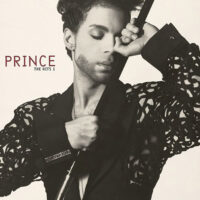
The Hits 1
September 1993

The Hits 2
September 1993

The Hits/The B-Sides
September 1993
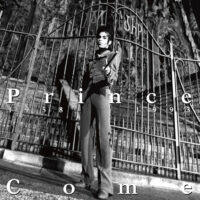
Come
August 1994
The Black Album
November 1994

The Gold Experience
September 1995
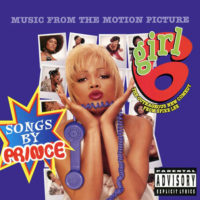
Girl 6
March 1996

Chaos And Disorder
July 1996

The Vault: Old Friends 4 Sale
August 1999

The Very Best Of Prince
July 2001

Ultimate
August 2006

Art Official Age
September 2014
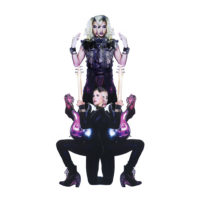
Plectrumelectrum
September 2014
© Goldies Parade, 1998 – 2026 • Privacy