
Home / Prince Discography / Filmography /

Graffiti Bridge Prince movie
Warner Bros. Pictures
motion pictureMaybe it will take people 30 years to get it. They trashed The Wizard Of Oz, too.
Graffiti Bridge is the movie sequel to Purple Rain in which Prince reprises his role as The Kid, as does The Time as his musical foil. In the hope to repeat its wining formula, the storyline is almost identical but this time the bands battle it out for the ownership of a nightclub named Glam Slam. Three other venues feature in the movie – Pandemonium (owned by rivals The Time), Melody Cool (owned by Mavis Staples), and Clinton Club.
The movie’s concept is inspired by a real graffiti daubed derelict bridge in Eden Prairie, Minnesota, which in the film inspires the location where Prince’s character meets his guardian angel, Aura. The story originated from Prince’s abandoned 1986 stage musical titled The Dawn, an idea that in 1987 developed into a concept for a fully-fledged movie with Prince playing a character named Camille Blue. Having worked with Madonna at Paisley Park to record Like A Prayer album, she declined Prince’s invitation as the female lead and the part was subsequently offered to Sheena Easton. The project was shelved when the female leads pulled out, but having met Kim Basinger on the set of Batman in 1989 and started dating, Prince and Basinger wrote an entirely new 35-page screenplay. When Basinger too quit the project, the script was completely rewritten into the sequel to Purple Rain fronted by The Time. At this point Sheila E and Jill Jones were mooted at various stages for the female lead role of Aura. But when Warner Brothers discovered Prince was going to direct but not feature in the movie, The Time’s role was diminished and the storyline focused on Prince in the central role as The Kid. The female lead was ultimately played by Ingrid Chavez, the poet who in her first encounter with Prince in 1987 famously convinced him to discard The Black Album and follow a more spiritual direction. Their meeting inspired the creation of Lovesexy.
Set in the fictional Minneapolis district called Seven Corners, following the death of Billy Sparks, fictional former owner of First Avenue in Purple Rain, he had gifted Glam Slam to Morris Day and The Kid to their joint ownership. The Kid, haunted by memories of his dead father, becomes in desperate need of $10,000 to save Glam Slam as the club faces threat of closure. Morris challenges The Kid to a winner takes all bet, and over at Pandemonium Morris’ band draws bigger audiences as the hottest venue in town. The heaven-sent Aura arrives as The Kid’s guardian angel and instils within him a confidence to fight for Glam Slam and secure its future. Dance scenes ensue as the venues battle it out to win over the largest audience. The situation is further complicated as a love triangle forms as The Kid and Morris also complete for Aura’s affections. Events take a tragic turn, when Aura is stuck down by a car in the middle of the Seven Corners her death reunites the divided community. Morris and The Kid patch up their differences and harmony prevails.
At the time, Prince was going through artistic change and having fired his management team Cavallo, Ruffalo and Fargnoli and appointed Purple Rain director Albert Magnoli his new manager. Following a visit to Pinewood Studios to the set of Batman and taking on its soundtrack at the invitation of its director Tim Burton, Prince was drawn into the world of big-budget movie making. Prince wanted to make an uplifting film, without sex, drugs or violence but also a movie which could be finished within weeks not years. Buoyed by Prince’s return to the top of the US charts with his soundtrack for Batman, Warner gave the go-ahead to finance Prince’s third motion picture. The Graffiti Bridge movie was shot almost entirely on the soundstage of Prince’s personal purpose built recording compound Paisley Park Studios. Its set filled with street scenes faithfully reconstructed the district of Minneapolis his father John Lewis Nelson played the jazz clubs during that became so impactful in Prince’s childhood.
Once the script had again been rewritten and completed on 7 February 1990, principle photography started on the 15th and wrapped in short order thirty-six days later on 23 March. The initial edit was ready on 19 April and test screened in Pasadena – the city had produced the highest takings for Purple Rain. But following bad responses from the screening, Prince began further revisions to clarify the storyline. Reshoots overran and Nude Tour, scheduled to start that May, was postponed to June. Even when on tour Prince continued to review the re-edits from various locations throughout, making the process much longer than anticipated. The troubled project even resulted in the tour’s Europe leg’s curtailment so that Prince could rush back to Paisley Park to make further reshoots and adjustments, causing the movie’s 7 August premiere to slip to the autumn.
The movie boasted a cast 500 extras and lavish dance scenes choreographed by Paula Abdul herself. Prince’s actual touring band of 1990 feature as The Kid’s band in the movie. But they too had their fare share of troubles. Despite being a member of the band since 1978, Matt Fink was not cast in the movie in order to have him prepare the keyboard programming for Nude Tour. The band’s keyboardist was thereby played by Philip Carreon in the movie, Prince’s hairstylist whose previous screen appearance was as the announcer in the promo video for Partyman. This would become the leading factor behind Fink, Prince’s longest serving band member, departure form Prince’s camp that December. Unhappy with the direction of the project, Magnoli declined to write the script and quit as both Prince’s manager and as producer of the movie, causing Rod Stewart’s manager Arnold Stiefel to step in and oversee the production.
Rather than focus on a proper storyline, Graffiti Bridge movie became primarily a vehicle to showcase Prince’s recently discovered R&B talents Robin Power, T.C. Ellis and Tevin Campbell all shoehorned into the film – Robin appearing as the daughter of Billy Sparks and Tevin playing the son of Melody Cool. George Clinton cameos in the movie as the fourth club owner in Seven Corners if only to sing We Can Funk – he, like Prince’s band have no speaking roles. Chavez’s parts are sung by Elisa Fiorillo. A good soundtrack was unable to save the movie from a derisory performance at the box office.
The bigger the hole, the bigger we fill
Graffiti Bridge premiered at the Zeigfield Odeon Theatre in New York on 1 November 1990, barely a week after editing finished on 24 October. The event was covered by MTV as a street party outside the venue, although marketing alone was unable to save the movie. Screenings widened to 688 theatres from November 2nd but poor reviews led to schedules swiftly cancelled. In the UK Graffiti Bridge went directly to home video. Sunk by its thin script in which Prince’s dialogue is minimal and his character developed no further than Purple Rain’s The Kid – who comes across as brooding, dry and unconfident. Day has the best lines and his presence carries the movie. If the movie was lacking in just one thing, it had no soul. Although the photography is nicely shot and the sets well produced, big clubs and dance routines proved no substitute for an unimaginative script. At the 1991 Golden Raspberries, Graffiti Bridge movie racked up a slew of nominations for worst picture, screenplay, director, leading actor and actress – although mercifully unsuccessful in every category.
In a year that also witnessed the releases of Goodfellas, Home Alone and Dances With Wolves, Graffiti Bridge movie grossed a paltry $3.9 million domestically and overall $4.5 million worldwide, returning Warner slim pickings from the movie’s $7.5 million budget. Some critics denounced it as “a Bridge too far”. Faring much better, the accompanying Graffiti Bridge soundtrack dropped on schedule on 21 August and was hailed as an artistic triumph. The LP peaked at number 6 in the US, and in the UK climbed all the way to the top of its album chart as well as scored Prince a nomination for best international male solo artist in the 1991 Brit Awards. Graffiti Bridge was a highly consequential moment in Prince’s career. Desperately needing to re-establish himself as an artist able to remain relevant for the 1990’s, that winter, Prince shuttered himself away at Paisley Park to work on his next project Diamonds And Pearls a co-creation with a new band, New Power Generation. Commercial success again was just around the corner.
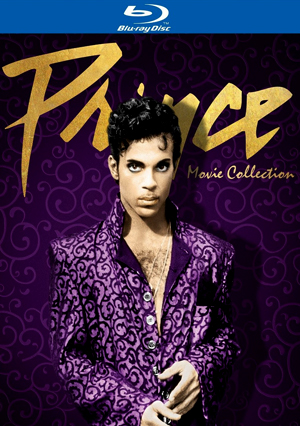
Graffiti Bridge movie debuted on VHS home video on 24 April 1991. Its DVD release followed on 18 October 2004 as part of a boxed set containing Prince’s three movies. Graffiti Bridge finally received its Blu-ray debut on 17 October 2016 as part of the Prince Movie Collection issued in the aftermath of Prince’s death. Prince always claimed the movie was just misunderstood. He made no more movies.
The Time reunion
Having disbanded shortly after the release of the Purple Rain movie over creative differences, as a condition to finance Graffiti Bridge Warner Brothers requested that all the original seven members of The Time reunite for the movie. It meant that the album Prince, Morris Day and Jerome Benton had been working on titled Corporate World was abandoned. Four tracks intended for that were transferred to Graffiti Bridge and three others were moved to what became the band’s fourth album, Pandemonium – their first LP to actually feature writing contributions by the band. The reunion would only be fleeting as The Time split again before the movie’s release.

Principal cast
- The Kid
- Prince
- Aura
- Ingrid Chavez
- Morris Day
- himself
- Jerome
- Jerome Benton
- Jill
- Jill Jones
- The Kid’s Band
- Rosie Gaines
- Michael Bland
- Levi Seacer Jr.
- Damon Dickson
- Kirk Johnson
- Tony Mosley
- Miko Weaver
- Philip Carreon
- The Time
- Garry Johnson
- Jesse Johnson
- Jimmy Jam
- Terry Lewis
- Monte Moir
- Melody Cool
- Mavis Staples
- George Clinton
- himself
- Tevin
- Tevin Campbell
- T.C. Ellis
- himself
- Robin
- Robin Power
Plot
It’s got that Purple Rain feeling through and through. And it’s got The Kid, too. For the first time since Purple Rain, Prince is back as The Kid. And where he goes, there’s music. With Thieves In The Temple and New Power Generation, Elephants And Flowers and more red-hot Prince tunes from the Platinum-selling Graffiti Bridge sound track. What time is it? Party time. Morris Day & The Time play Release It, Shake! and more. And you’ll also see and hear George Clinton, Tevin Campbell, Robin Power, Mavis Staples and other hot performers, too. Graffiti Bridge is where the movie meets the music.
The DVD release features the promotional music videos:
- New Power Generation (3:50)
- The Question Of U (4:02)
- Thieves In The Temple (4:08)
- Round And Round (4:16)
Data
- Director
- Prince
- Released
- 2 November 1990
- Reissued
- 17 October 2016 as Prince Movie Collection
- Running Time
- 86 minutes
- Orig. Format
Related releases

© Goldies Parade, 1998 – 2026 • Privacy