
Home /
Linn Drum Machine LM-1
Drum machine aficionados regard Prince as some sort of Hendrix of the LM-1.
The Linn Drum Machine was designed in 1979 by a guitarist-come-engineer named Roger Linn. He created not only was one of music’s first programmable drum machines, but the very first using samples recorded from real acoustic drums than produced from electronically created effects. Following a run of demos of the prototype Linn’s LM-1 entered production in 1980.
Unusual to any previously available drum machine, the Linn LM-1 housed an EPROM memory chip filled with a library of twelve tuneable 8-bit sound samples, interfaced by thirteen stereo mixers and rear ports able to connect each voice to an dedicated output for processing through external hardware, such as a recorder. The sounds comprised: congas (hi and lo), tom drums (hi and lo), snare, bass, hi-hat, cowbell, handclaps, rimshot, tambourine, and cabasa. Cymbal samples were not included in the LM-1 due to the cost constraint of memory chips, which would be ruinously prohibitive to be large enough to store the length of playback needed for the sound of a cymbal. The LM-1 was able to set and store up to 100 programmed patterns, then display the selection on a numbered digital panel as well as tempo setting. Unlike other drum machines of the time, because the LM-1 was not software driven each voice could be completely reconfigured using a tuning knob, and ‘swung’ or ‘shuffled’ to correct the drum pattern to sound more human like than a beat sustained by a computer. This variability sounded highly realistic and made the LM-1 revolutionary for its day; the perfect tool a genius song creator like Prince could wish for. Uniquely the LM-1s sounds were captured samples played on an acoustic kit. The drum sounds created for the LM-1 were performed by Roger Linn’s friend, Ron Wood’s brother Art Wood, reputedly within a sound proofed walk-in wardrobe at Linn’s home. These short samples of approximately 1/8th of a second were loaded into the LM-1’s memory as 28kHz sound files. The sampled handclaps were provided by Tom Petty.
The LM-1’s breakthrough came in 1981 with The Human League’s Don’t You Want Me, the first ever track created using a Linn LM-1 to top the Billboard Hot 100. Championed by the likes of Ultravox and Gary Numan, use of the LM-1 spread as its hit-making potential inspired many mainstream artists to adopt it, such as A-Ha (Take On Me), Falco (Rock Me Amadeus), Michael Jackson (Thriller), and of course Prince. With only 525 LM-1s ever manufactured, units were hard to obtain and commanded a hefty price of $4,995. Prince acquired his during mid-1981. Instantly able to master the device, Prince used the LM-1 extensively throughout the 1980s and with it crafted his uniquely signature sound. Indeed, the arrival of the LM-1 changed he direction of travel for 80’s pop music.

Rather than simply set a beat and use the preset sounds as other artists did, Prince totally retuned the samples and created his own effects to the point of not sounding like conventional drums at all. A further advantage of the LM-1, the key factor behind Prince’s interest to procure it, was that the unit’s rear panel provided individual outputs for each sound. This feature introduced Prince to endless possibilities, connecting the LM-1 to a reverb unit and even hooking up his guitar to it via Boss effects pedals to totally push boundaries Roger Linn himself had not imagined the equipment could achieve.
The first track Prince recorded with the LM-1 was Private Joy, which he laid down at Sunset Sound in Hollywood on 16 August 1981 as the final track created for his fourth LP Controversy. In the album’s earlier sessions, Prince used the Korg Mini Pops SR-120 to create synthesised drum patterns for Annie Christian, but allowing the creation of aggressively sustained beats and unlimited combinations of sounds the LM-1 became so inspirational to Prince it sent him into a creative period so prolific it would culminate with 1999, his first double LP.
Featured in every song on the 1999 album, the Linn Drum Machine LM-1 characterised Prince’s new sound, creating with it his breakthrough hits 1999 and Little Red Corvette and delivering his first US top-10 album. Prince was so taken with the LM-1, it played an integral in his sixth album – his debut backed with The Revolution – Purple Rain. The LM-1 provided the drum patterns for Let’s Go Crazy, Darling Niki, The Beautiful Ones, I Would Die 4 U and the B-sides 17 Days and Erotic City, and the outtake The Dance Electric. With The Revolution a Linn was used to create drum fills while Bobby Z played the verses and chorus. The Linn was also taken on tour, and in the live shows Bobby played an electric drum kit that triggered the beats. But of course LM-1’s most significant contribution, not only in Prince’s discography but arguably the greatest track ever to be created with it, was When Doves Cry. This track single-handedly cemented the Linn’s use in rhythm creation in electropop and shaped the trajectory of 1980s pop music and beyond.
By 1985, the LM-1 had become synonymous with Prince and continued to feature heavily in his output for the remainder of the decade: creating with it Paisley Park, Hello, Raspberry Beret, America, Pop Life, Temptation, The Ladder, and She’s Always In My Hair for the album Around The World In A Day; A Love Bizarre for Shelia E; and in 1986 Parade (Girls & Boys, Life Can Be So Nice, Mountains, Anotherloverholenyohead and Love Or $) and The Black Album (Bob George, Superfunkycalifragisexy); 1987 Sign O’ The Times (Housequake, The Ballad Of Dorothy Parker, It, Hot Thing, Forever In My Life, U Got The Look, If I Was Your Girlfriend, Strange Relationship, The Cross, the title track, and outtakes Good Love, Scarlet Pussy and Feel U Up); Lovesexy in 1988 (I Wish U Heaven); 1989 Batman (The Future, Partyman and Lemon Crush); and Can’t Stop This Feeling I Got and Melody Cool for Graffiti Bridge in 1990. The Linn LM-1 also made continuous appearances in Prince’s many side projects; The Time, Vanity 6, Apollonia 6, Sheila E, The Family and Jill Jones.
Prince’s use of the LM-1 diminished in the 1990s when his creative style shifted to fully live percussion, particularly once backed by the New Power Generation in the effort to create music more contemporary to the period. After a spell, Prince dug out his prized LM-1 in 1998 to program sequences for Newpower Soul as well as for the tracks Rave Un2 The Joy Fantastic and Undisputed (1999). Prince’s subsequent uses of the LM-1 came in his late career, for projects evoking the nostalgia of his creative past; creating the track What Do You Want Me To Do for Musicology album in 2004, and Here in 2009 included in his thirty-fourth studio album MPLSound. His final use of the LM-1 was with 20TEN (2010), deploying it triumphantly throughout the album.
The Linn Drum Machine LM-1 was superseded in 1982 by the LinnDrum (sometimes referred to also as the LM-2 although there was no such model), sporting extra memory to include cymbal samples. Thanks to the improving affordability of memory chips, LinnDrum retailed at the lower price of $2,500. Easier to obtain and with 5,000 units sold, LinnDrum became a staple in music production. Linn’s third generation computer entered the market in 1984 as the Linn 9000. The model introduced rubber keypads that changed the design of drum machines forever. Owing to its excellent built quality, Prince remained faithful to the LM-1 and never changed it. However, with quality slipping and just 1,100 of the units sold, a reputation of unreliability with the Linn 9000 brought production to a halt in 1985 and Linn Electronics Inc. ceased trading in 1986.
The combination of Prince and the Linn LM-1 are so inseparably entwined, the paring hugely influenced the next thirty years of music. So strong is the legacy of Linn’s drum machines his originals are still in use in music production today: for those who can find one.
Albums featuring the Linn Drum Machine

Controversy
October 1981

Vanity 6
August 1982

What Time Is It?
August 1982

1999
October 1982

The Glamorous Life
June 1984

Purple Rain
June 1984

Ice Cream Castle
July 1984

Apollonia 6
October 1984

Around The World In A Day
April 1985

The Family
August 1985

Romance 1600
August 1985

Parade
March 1986

Sheila E
February 1987

Jill Jones
March 1987

Sign O’ The Times
March 1987
The Black Album
December 1987

Lovesexy
May 1988

Batman
June 1989

Graffiti Bridge
August 1990
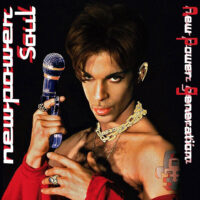
Newpower Soul
June 1998

Rave Un2 The Joy Fantastic
November 1999

Musicology
April 2004

MPLSound
March 2009

20TEN
July 2010
© Goldies Parade, 1998 – 2026 • Privacy