
Home / Prince Discography / Associated Artists /

Madhouse 16 Madhouse album
Warner Bros. Records
albumPrince is playing drums on the title track 16 and he kills it.
The second LP by Prince’s jazz-funk instrumental spin-off project Madhouse is titled 16. It was recorded between 30 July and 2 August 1987 immediately after the shooting of the Sign O’ The Times movie. With the exception of one track, Madhouse 16 became the inaugural studio material tracked at Prince’s newly operational Paisley Park Studios. The remaining track Nine was recorded at Prince’s Galpin Blvd home studio early that March prior to Paisley Park’s opening.
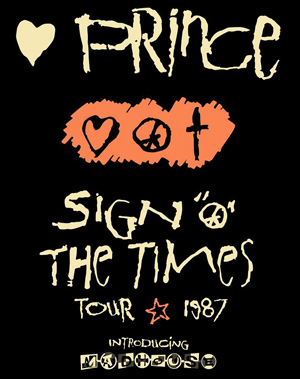
Madhouse 16 was preceded by Madhouse 8, a collaboration with Prince (playing drums, bass and keyboards) and saxophonist Eric Leeds. To produce Madhouse’s second album, the musicians contributing to the project broadened from a duo, to include Sheila E (drums), Levi Seacer Jr. (bass) and The Revolution’s sole remaining member Matt Fink (keyboards). This expanded lineup had earlier accompanied Prince on his Sign O’ The Times Tour to perform Madhouse as opening act, and because Sheila was also in Prince’s main band, Dale Alexander of 94 East was enlisted as guest drummer to Madhouse’s touring lineup. Madhouse 16 was released under Paisley Park Records in November 1987, almost four months after the tour concluded, thereby on occasion tracks Nine and Sixteen were included in their act on that tour.
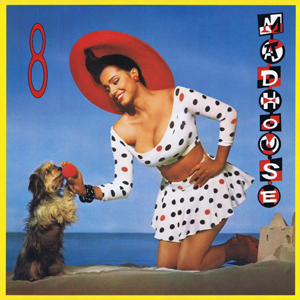
Promotional videos were produced for the album’s two singles 10 and 13, set in the 1920s following a theme inspired by bank robbers Bonnie and Clyde. Model Maneca Lightner who is pictured on the covers of Madhouse 16 and 8 stars in the videos, accompanied by the band sans Prince and Sheila. Filming took place at Paisley Park at the same time of the creation of the LP.
The follow-up LP continued the naming tradition began with Madhouse 8, by titling its tracks numerically and thereby begins where the previous eight track debut left off. Madhouse 16 comprises tracks Nine to Sixteen, the last giving the name of the album. Prince’s involvement in Madhouse 16 is hidden under the pseudonym John Lewis (his father’s name) although it was an open secret Prince was the band’s unnamed frontman. The album bears the subtitle New Directions In Garage Music in homage to Miles Davis.
Madhouse 24
Recording of material intended for a third Madhouse album began in July 1988, laying down what would become tracks 21 to 24, at Townhouse Studios, Shepherd’s Bush when in London staging during the Lovesexy Tour. The remainder of the album (tracks 17 to 20) was recorded back at Paisley Park Studios that December following the tour’s conclusion. Following the nomenclature of previous Madhouse releases the third album was duly to be named 24. Prince again co-wrote its material with Eric Leeds but when the work was rejected by Warner Brothers in 1989, Prince handed the project to Leeds to re-work and evolve into his debut solo LP. The tracks were renamed, dropping their numbering, and following some reworking was released via Prince’s Paisley Park Records in 1991 titled Times Squared. The Madhouse project was later revived with the NPG, recording of further material on 7 July 1993 and planned for release at some point during 1994/. However, for reasons unknown, Prince shelved the project. The only track intended for 24 that would receive a commercial release in its original form, was 17, appearing in the configuration of NPG Records 1994 compilation 1-800 NEW FUNK.

Performers
- Sax / Flute
- Eric Leeds
- Drums
- Sheila E.
- Bass Guitar
- Levi Seacer Jr.
- Keyboards
- Matt "Dr." Fink
- All instruments
- Prince (credited as John Lewis)
Data
- Producer
- Prince (as Madhouse)
- Label
- Paisley Park Records
- Distribution
- Warner Bros. Records
- Cover/Design
- Richard Litt and Laura LiPuma
- Released
- 38 years ago on 18 November 1987
- Running Time
- 36:42
- US Chart Peak
- Did not chart
- UK Chart Peak
- Did not chart
- Orig. Formats
-
Tracklist
- Nine (2:06) 1
- Ten (5:04) 2
- Eleven (6:13) 2
- Twelve (5:15) 1
- Thirteen (4:46) 1
- Fourteen (5:12) 1
- Fifteen (3:48) 2
- Sixteen (4:17) 2
Released as a single
1 Written by Prince.
2 Co-written by Prince and Eric Leeds.
Singles from Madhouse 16

(The Perfect) 10
Paisley Park Records
- Released
- 28 September 1987
- Distribution
- Warner Bros. Records
- US Chart Peak
- Did not chart
- UK Chart Peak
- Did not chart
- Format
-
- 10 [The Perfect Mix] (7:13)
- (The Perfect) 10 (3:51)
- Ten And ½ (3:18)
- Two (5:29)

13
Paisley Park Records
- Released
- 18 March 1988
- Distribution
- Warner Bros. Records
- US Chart Peak
- Did not chart
- UK Chart Peak
- Did not chart
- Format
-
- Thirteen [The Paisley Park Mix] (7:49)
- Thirteen And ¼ (5:47)
- Thirteen (4:46)
- Four (2:24)
Supporting tour
Madhouse 16 album review
There can be little disputing sax god Eric Leeds’s contribution to and the footprint he left on Prince’s catalogue. To have inspired Prince to fill three albums worth of material – 24 tracks in total – much can be said for the gentle Eric Leeds. Credited for introducing Prince to the world of jazz in 1986, the style featured heavily in the Sign O’ The Times Tour. Madhouse 16 is the project’s follow-up album to 8, recorded straight off the back of the shooting of the Sign O’ Times movie. Albeit on this occasion, the ensemble became a larger band and the outcome is a larger production – the key influence remaining Prince and Leeds.
The album begins with the frantic Nine and sets out a more formulaic tone than the predecessor 8, in that once a melody is found it is worked over some more minutes, this approach is continued with Ten, Eleven and Thirteen, although the effect is still pleasing. The album takes flight midway through, Twelve raising tension as if it were written for a gameshow and has the flair of Prince’s Courtin’ Time. The top track is one of the most delicate ever produced by Prince – Fourteen, should there be ever need of proof enough Leeds is a virtuoso with the flute this is case closed. It betters, but only slightly, the ever climbing Fifteen. Leeds was right saying Prince kills the drums on Sixteen – he lets fly – and closes the album in Prince’s typical ‘leave em begging for more’ style. If there was ever a showcase to Prince’s depth of talent the Madhouse project fits the bill perfectly. Without it, there would have been no The Rainbow Children.
Madhouse 16 is rated 3.5 out of 5 by Goldies Parade.
Related release
© Goldies Parade, 1998 – 2026 • Privacy